
What “Cinematic” Actually Means in Brand Storytelling
- BellyFull Films

- Jan 13
- 3 min read
“Cinematic” is one of the most common words used in video briefs.
It is also one of the most misunderstood.
Clients ask for cinematic lighting, cinematic shots, cinematic edits. What they are usually asking for is something harder to name. They want the video to feel a certain way. Important. Grounded. Trustworthy. Human.
That feeling does not come from spectacle alone.

Cinematic starts with feeling, not technique
For me as a filmmaker, cinematic has always been about feeling first. Before I think about lenses, movement, or edit rhythm, I’m thinking about how I want the audience to feel in a moment. Calm. Intimate. Uneasy. Dramatic. Reflective.
Every choice flows from that.
Cinematic storytelling is not about showing everything. It is about shaping experience. You are deciding what the audience notices, what they sit with, and what they are allowed to feel without being told.
Why light matters more than people realize
Light is one of the most powerful storytelling tools we have. Not because it looks impressive, but because it sets emotional context instantly.
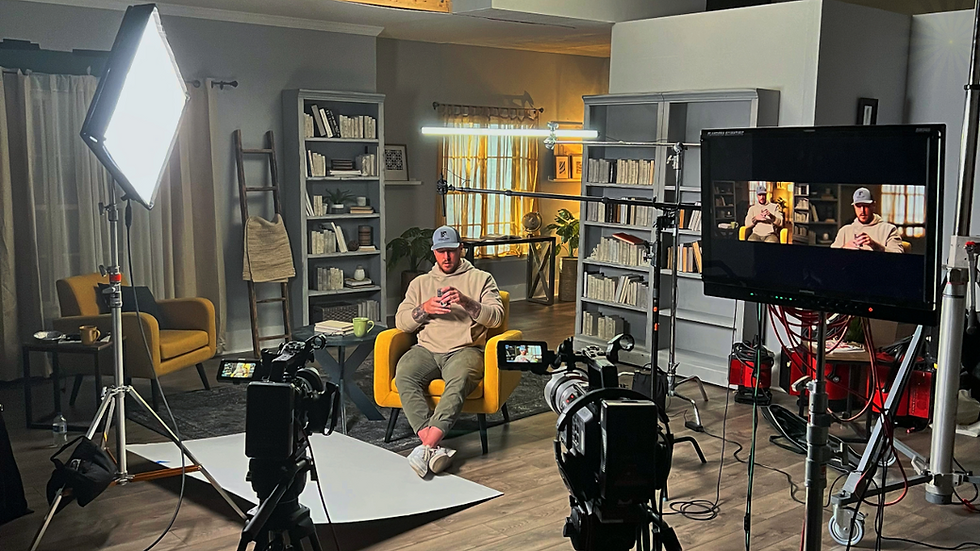
You can take the same space and make it feel open or closed, safe or tense, honest or guarded, simply by how you shape the light. Before a word is spoken, the audience already feels something. That is not decoration. That is authorship.
Lighting is not about making things visible. It is about making them felt.
Intentional craft is what makes something cinematic
Cinematic does not mean dramatic for the sake of drama. It means intentional.
It means:
Shaping light to support mood, not to show off
Choosing camera movement that follows emotion, not habit
Letting moments breathe when they need space
Cutting when clarity is gained, not when energy spikes
When craft serves feeling, the audience stops noticing the technique. They lean into the experience instead. That is when something feels cinematic.
Why restraint protects emotion
Restraint matters because emotion needs space.
When every shot is stylized, nothing feels grounded. When every moment is heightened, the audience stops trusting what they are seeing. Cinematic work understands contrast. Quiet moments make strong moments land harder. Simplicity gives stylization meaning.
Restraint is not minimalism. It is discipline. It is knowing when to do less so that feeling has somewhere to land.
When “cinematic” becomes a problem
Cinematic becomes a problem when it is treated as a look instead of an intention. Slow motion without purpose. Moody lighting without context. Beautiful shots that do not move the story forward.
At that point, the audience becomes aware of the filmmaking instead of the feeling or the narrative. The work may look polished, but it feels distant. The viewer senses that something is being performed rather than shared.
What cinematic actually looks like in practice
In practice, cinematic storytelling shows up as care.
Care for:
How a space feels, not just how it looks
How long a moment is allowed to exist
How much information the audience actually needs
How emotion unfolds naturally instead of being pushed


Comments